
How often should you wash your house in North Alabama?
Published · Updated
In this guide
Follow the cleaning schedule for your siding, and check for buildup between washes. How quickly a house gets dirty depends on its shade, trees, drainage, and exterior finish. One wall may need attention while another still looks clean.
For example, James Hardie recommends a low-pressure hose cleaning every 6–12 months for its siding and trim. That is product-care guidance, not a reason to put every home on the same professional-washing schedule.
Walk around the house a few times a year
A look around the exterior as the seasons change can help you catch spreading growth and recurring stains. After a storm, check for new damage as well as dirt.
Pay particular attention to shaded walls, lower siding beside beds, areas beneath downspouts, and porch ceilings. Notice whether paint, caulk, or siding is loose. Photos taken from the same spot make later changes easier to compare.
Some homes get dirty faster than others
Two houses on the same street can need washing at different times. Here are common reasons:
| Condition | Where to look | What you may notice |
|---|---|---|
| Dense tree cover | Shaded walls and porch edges | Green or dark buildup and leaf debris |
| Limited direct sun | North-facing siding | Areas that dry slowly after rain |
| Bare soil beside the house | Lower siding and brick | Orange splash after rain |
| Irrigation overspray | Walls near sprinkler heads | Repeated wetting or mineral marks |
| Nearby construction | Ledges and textured surfaces | Settled dust |
| Worn paint or open joints | Trim and older cladding | Chalking, peeling, or water-entry concerns |
Huntsville’s monthly climate normals show rain throughout the year. Shade and repeated wetting are therefore worth watching beyond the spring cleaning season.
Learn the difference between buildup and wear
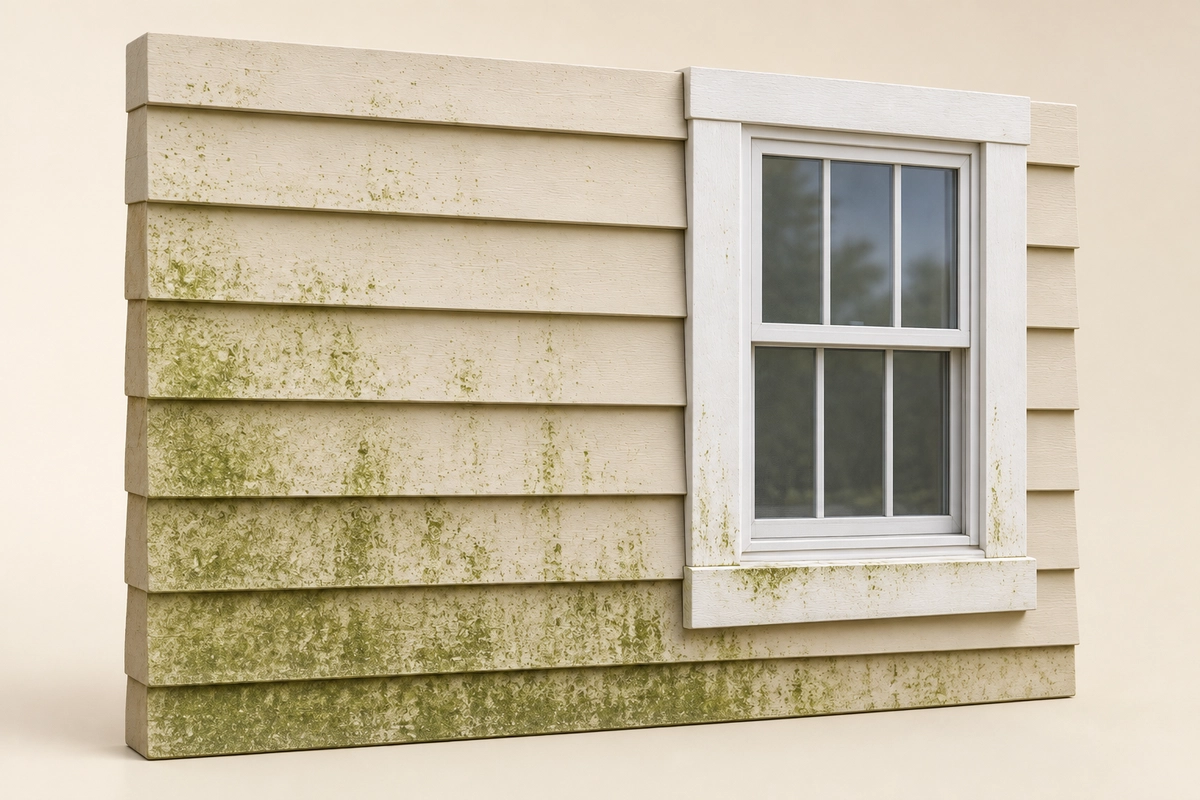
Green or dark film on a damp wall can indicate organic growth. A chalky finish, peeling paint, or a faded panel may be weathering instead. These conditions can occur together, so cleaning does not necessarily produce a uniform color.
The pattern helps: growth often follows shade and moisture, while coating wear may show on exposed areas or along edges. If you are unsure, send a wider photo and a close-up. We can discuss whether the request is for washing, stain treatment, or work that needs another trade.
Pollen does not always mean a full house wash
Loose pollen and recent dust may come away with the gentle rinse allowed by your siding’s care guide. Established dark buildup can need a cleaning treatment.
For any ground-level rinsing, follow the manufacturer’s instructions and keep water out of openings and behind siding. Let the wall dry before deciding what remains. Wet siding can make stains and weathering harder to distinguish.
Follow the care guide for the actual material
Fiber cement, vinyl, painted wood, and brick do not all need the same cleaner or pressure. Keep the product care instructions with your home records, especially for a factory finish or a recent paint job.
If you do not know the siding brand, installer paperwork, spare material, or an invoice may identify it. That information is more useful than choosing a machine setting in advance.
Plan cleaning before painting or staining
A wash can be part of preparation for a new finish. Loose paint, failed caulk, rotten wood, and damaged siding still need to be addressed separately.
Coordinate with the painter or coating contractor before scheduling. The product they will apply determines the preparation and drying requirements; a clean-looking wall is not automatically ready to paint.
Roofs and concrete follow their own schedule
A house wash does not automatically include the roof. Algae streaks on asphalt shingles need roof-specific treatment under the shingle manufacturer’s guidance. ARMA advises against pressure washing those shingles.
Driveways and steps may need attention because of slick growth or accumulated debris even when the siding is clean. They should be quoted according to their own condition.
When to call about a house wash
Ask about a wash when green or dark buildup is spreading, the shaded walls have become noticeably dirty, or you are preparing for exterior work. Red-clay splash and irrigation stains may need separate treatment alongside the wash.
Our house washing service uses low pressure suited to the exterior. Tell us which areas concern you and whether you have any manufacturer instructions or painting plans.
Keep a short record
Save the cleaning date, a few photos, and any care instructions. Over time, those records show how quickly buildup returns on your home and whether an irrigation or drainage adjustment helped. Use that experience alongside the siding manufacturer’s schedule to plan the next wash.
Sources
Want us to handle it?
See exactly how we clean it and what’s included, or send us the details for a free quote.
Get a free quoteKeep reading
Ready for a clean you can see from the curb?
Tell us what you’d like cleaned, then text or email a couple of photos. We’ll explain the work and send a free quote.