
When to soft wash and when to use pressure
Published · Updated
In this guide
Soft washing uses a cleaning treatment and a low-pressure rinse. Pressure washing uses water force to lift buildup from a surface that can tolerate it. Both have a place in exterior cleaning.
Siding and asphalt shingles need a gentler approach than a typical concrete driveway. Wood, composite, masonry, and coated surfaces need their own assessment. The method follows the material and the stain.
Methods at a glance
| Method | How it works | Typical use |
|---|---|---|
| Soft washing | A suitable cleaner loosens or treats buildup before a low-pressure rinse | House siding and suitable roof treatments |
| Pressure washing | Controlled water force removes dirt and growth | Sound, uncoated concrete and selected hard surfaces |
| Gentle rinsing | A hose removes loose surface debris | Recent pollen, dust, or mud where the material’s care guide allows it |
A pressure-washing machine can deliver a low-pressure rinse with the right setup. The name on the equipment does not tell you how much pressure reaches your siding.
Soft washing is for pressure-sensitive surfaces
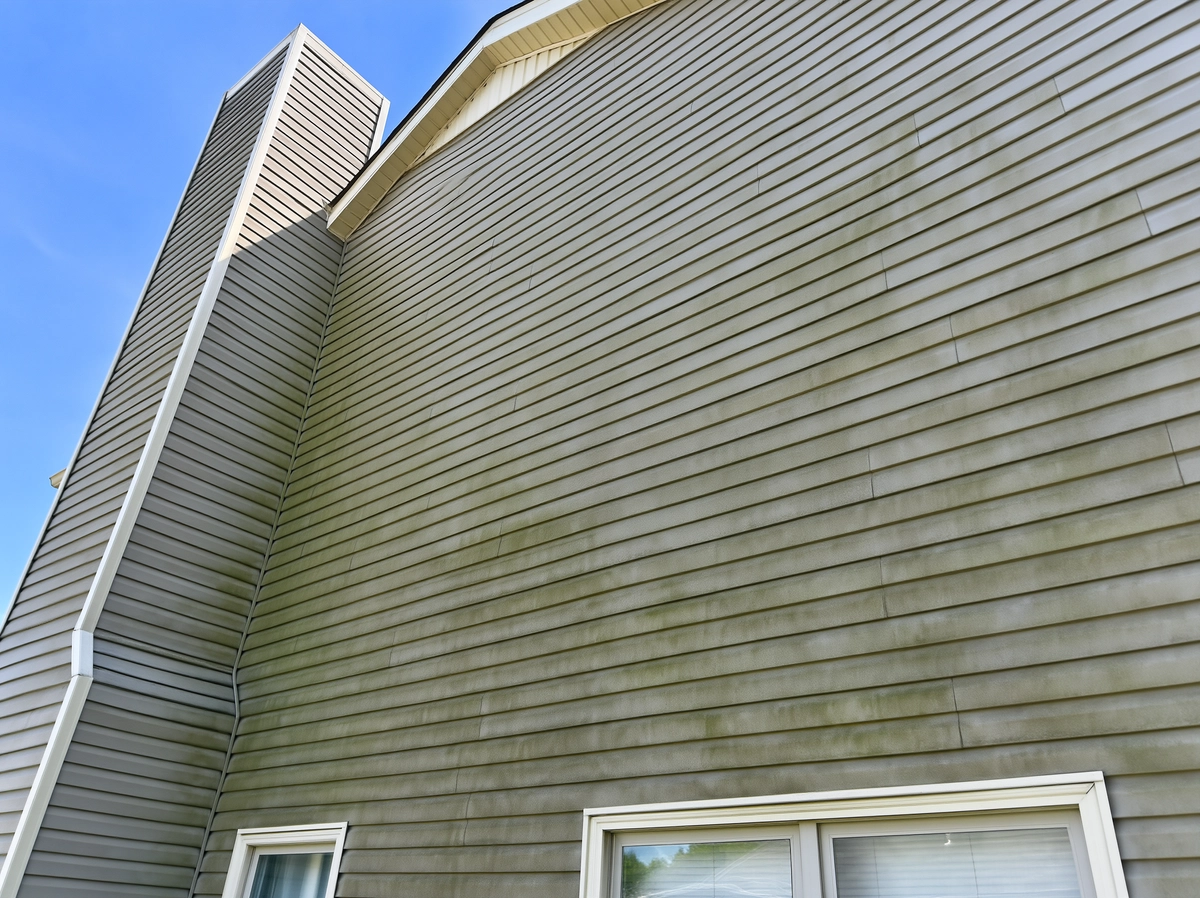
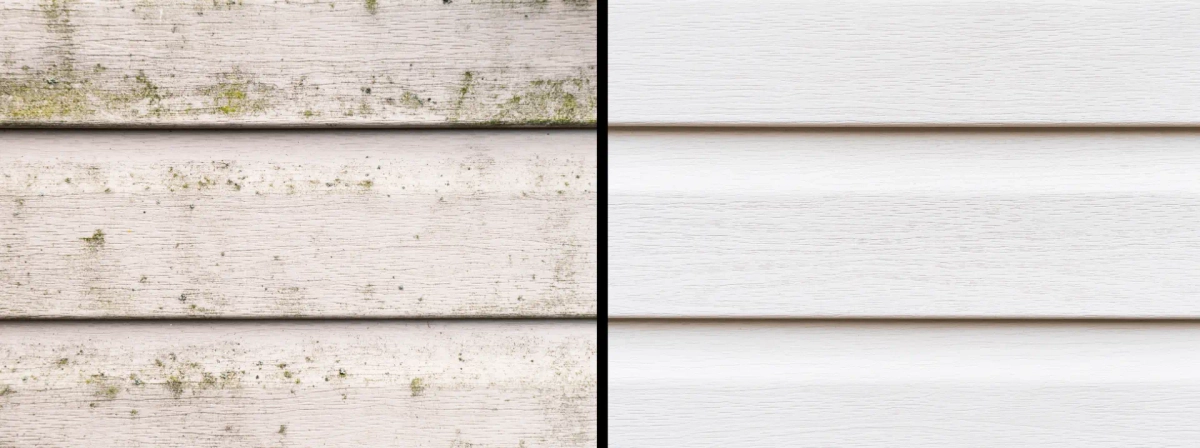
On a house, treatment can address green or dark growth without relying on a strong jet against the wall. The cleaner still has to suit the siding, paint, trim, and surrounding materials.
Low pressure alone does not make every product suitable. A house wash also needs to account for planting beds, metal fittings, windows, and the route of rinse water. Those are part of carrying out the service properly, rather than reasons for you to choose the equipment yourself.
Pressure washing concrete
A sound concrete driveway can often be cleaned with controlled pressure to lift dirt and organic film from its texture. A consistent pass helps avoid visible lines.
Decorative color, a sealer, surface damage, and recent repairs can change that approach. The same applies where the concrete meets pavers or another material.
Some stains need treatment beyond the general wash. Red clay, rust, oil, and paint do not all respond to the method used for algae. If a mark remains while the surrounding concrete gets cleaner, it needs identification rather than repeated concentrated spray.
Siding needs low pressure
Water directed into siding laps, vents, and openings can reach behind the exterior. Weathered paint and oxidized finishes can also be damaged or marked by aggressive washing.
James Hardie recommends low-pressure care for its siding. The Vinyl Siding Institute’s manual describes hose-and-soft-brush cleaning for vinyl. Follow the instructions for the actual product and finish on the house.
Roofs should not be pressure washed
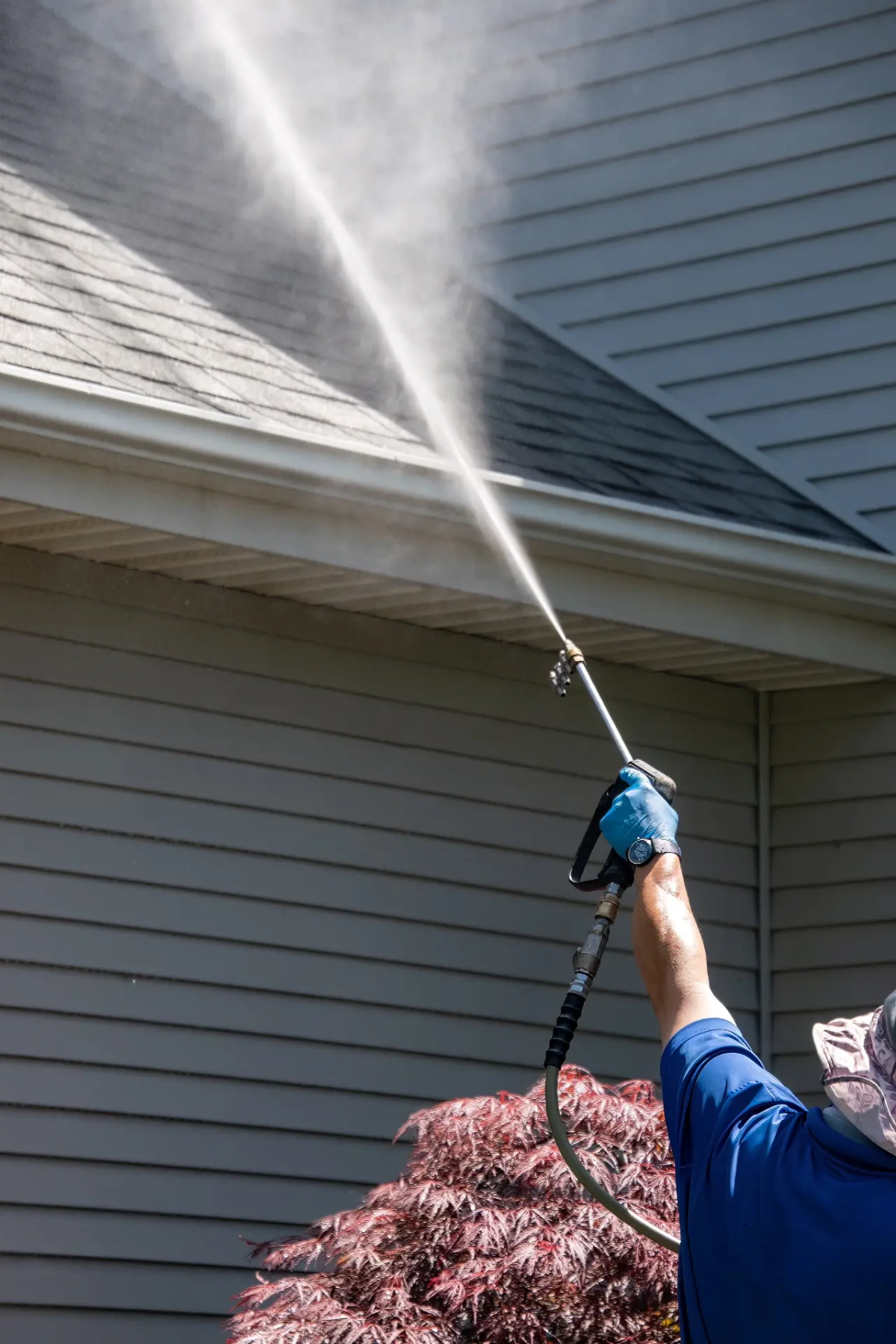
For asphalt shingles, ARMA prohibits power washing or scrubbing algae with a brush or broom. A roof treatment must follow the shingle manufacturer’s guidance.
Dark streaks can be a cleaning issue. Missing shingles, leaks, and storm damage need a roofer first. The roof-streaks guide explains that distinction in more detail.
Wood and composite need less pressure than concrete
Strong spray can leave natural wood with raised grain or grooves. A deck wash should preserve the boards and take any existing finish into account.
Composite care varies by product. Trex’s guidance distinguishes current product lines from early-generation decking, so a setting from another deck may not apply. The brand and product line are useful details to share.
Loose boards, failing railings, and rot need repair; cleaning only addresses the surface.
Brick, pavers, and coated surfaces vary
Masonry joints may be weaker than the surrounding material, and paver joints contain sand or other material that needs to remain in place. Coatings and decorative finishes can also limit the cleaner or pressure used.
Tell the contractor about paint, sealers, previous repairs, or loose material. For a broader material-by-material reference, see which exterior surfaces can handle pressure washing.
What to include in a cleaning request
You do not need to decide between soft washing and pressure washing before requesting a quote. Tell us what you want cleaned: green siding, a dark driveway, or orange marks along a patio edge. Photos help show the extent of the work.
We will discuss the appropriate service, what is included, and any stain treatment or repair that needs separate attention.
Cleaning-product and equipment safety
Both the cleaning product and the equipment need proper handling. Follow product instructions and the CDC’s pressure-washer safety guidance if doing work yourself. Keep others clear of the area and leave roof access or work around damaged electrical fittings to the appropriate professional.
Choose a cleaning service
For siding, see low-pressure house washing. For concrete, see driveway and patio cleaning. If you are unsure which service fits, send a photo and describe the result you want.
Sources
Want us to handle it?
See exactly how we clean it and what’s included, or send us the details for a free quote.
Get a free quoteKeep reading
Ready for a clean you can see from the curb?
Tell us what you’d like cleaned, then text or email a couple of photos. We’ll explain the work and send a free quote.