
Which exterior surfaces can handle pressure washing?
Published · Updated
In this guide
Sound, uncoated concrete is a common candidate for pressure washing. Asphalt shingles should not be pressure washed, while siding, wood, composite, masonry, and decorative finishes need methods suited to their material and condition.
The surface name is only a starting point. A painted patio has different limits from bare concrete, and a wall with worn mortar needs different care from one with intact joints.
A quick guide to common surfaces
| Surface | Usual approach | What changes the work |
|---|---|---|
| Sound, uncoated concrete | Controlled pressure | Scaling, repairs, decorative finishes, or specialty stains |
| Vinyl, fiber cement, and painted siding | Low-pressure cleaning | Product instructions, weathered coatings, and openings |
| Asphalt shingles | Roof-specific treatment; no pressure washing | Shingle condition and manufacturer guidance |
| Wood decks and fences | Gentle, wood-appropriate cleaning | Weathering, coatings, and board condition |
| Composite decking | Follow the exact product’s care guide | Brand, product line, and age |
| Brick and mortar | Method suited to the whole wall | Joint condition, coatings, and moisture problems |
| Pavers and stone | Product-appropriate cleaning | Joint material, sealers, and stone type |
| Windows and screens | Gentle exterior cleaning | Seals, screens, trim, and existing damage |
Use the manufacturer’s instructions where available. They are more reliable than borrowing a pressure setting from a different surface.
Sound concrete often handles controlled pressure
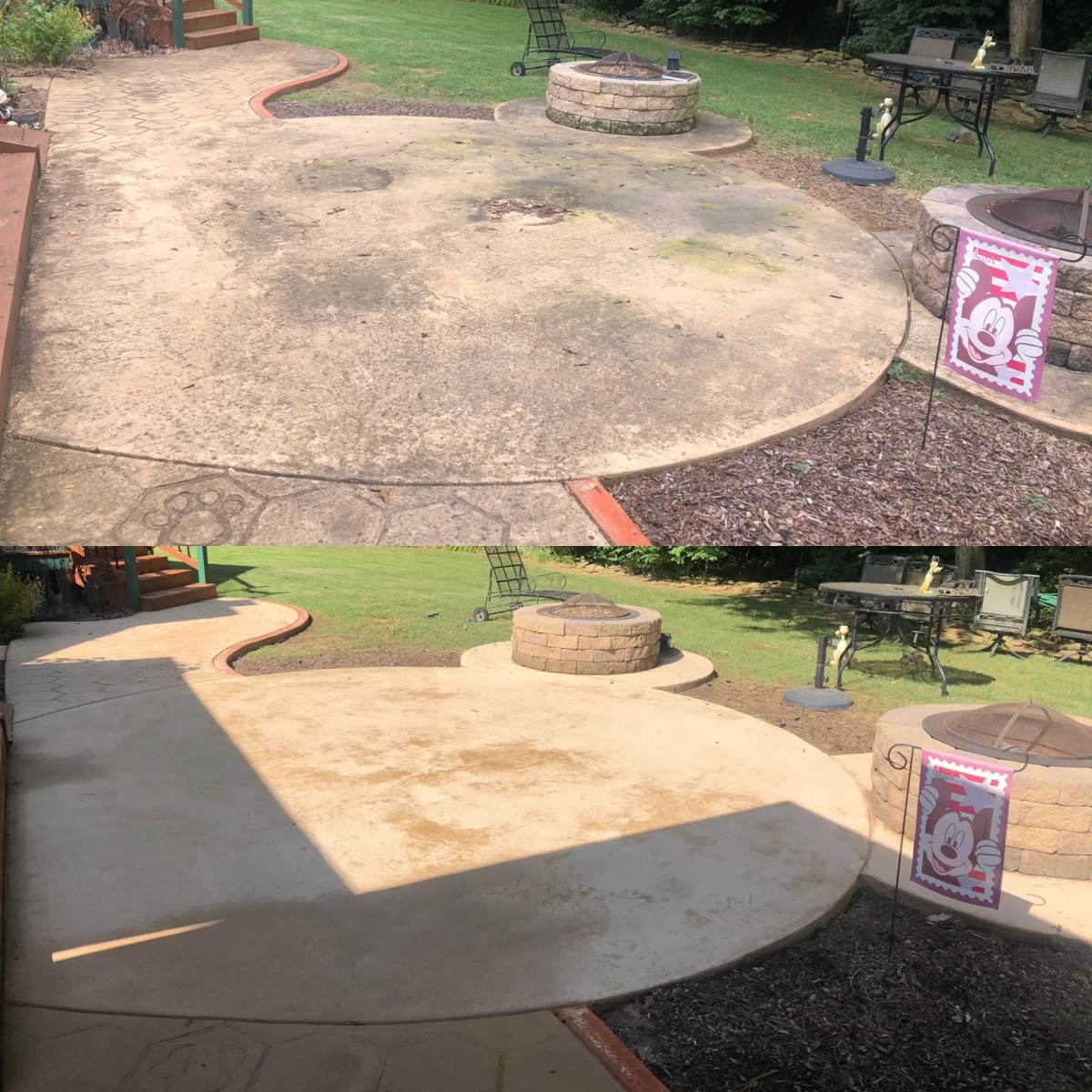
Driveways, walks, and plain concrete patios can hold dirt and growth in their texture. Controlled pressure can remove that buildup without repeatedly concentrating the spray on one spot.
Scaling, loose surface material, coatings, and decorative finishes need closer assessment. A stain that remains after surrounding dirt comes off may need its own treatment. More pressure can leave stripes without removing red clay, rust, or oil.
Our driveway and patio cleaning service covers general cleaning of suitable concrete. Specialty stain treatment is quoted separately.
Pool surrounds add coping, joints, drainage, and splash protection to the cleaning plan. See our pool-deck cleaning guide for those details.
Siding needs a low-pressure method
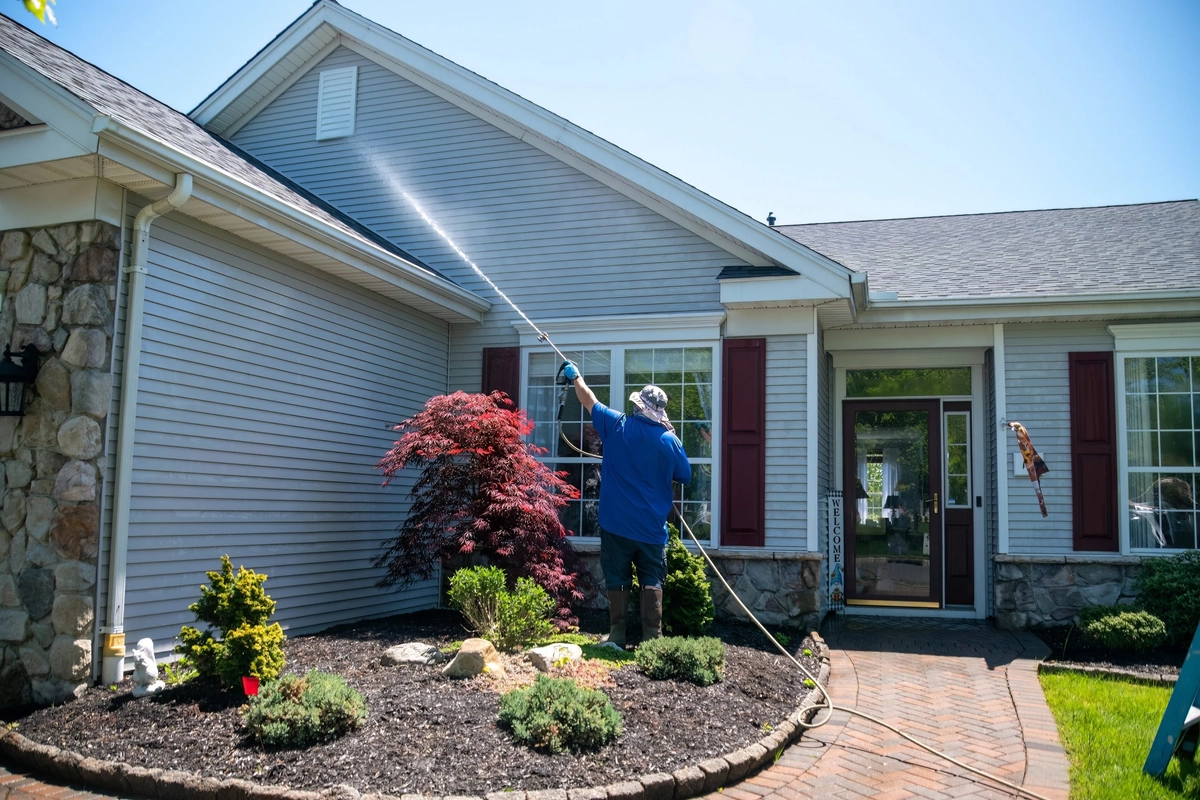
Siding has seams, vents, trim, and openings that should not receive concentrated spray. Paint and weathered finishes can also be damaged by aggressive washing.
James Hardie recommends low-pressure care for its siding, and the Vinyl Siding Institute describes gentle hose-and-brush cleaning. The exact product and finish determine the suitable cleaner.
See house washing for the work included with a low-pressure exterior wash.
Asphalt shingles should not be pressure washed
ARMA’s algae-cleaning bulletin prohibits power washing and scrubbing with a brush or broom. Suitable shingles need treatment that follows their manufacturer’s guidance.
Leaks, missing shingles, and storm damage should go to a roofer before cosmetic cleaning. Ground-level photos can help you discuss visible staining without climbing onto the roof.
Cleaning wood and composite decking
Too much force can cut into wood, leaving ridges or raised grain. Existing stain, gray weathering, and board damage affect what cleaning can achieve.
Composite decking has different restrictions. Trex’s care guide allows pressure washing under specified conditions for some lines and advises against it for early-generation products. Identify the product before applying another deck’s method.
Our deck-cleaning guide covers wood, composite, and preparation for a new finish.
Cleaning brick, pavers, and stone
A brick wall can have sound faces and deteriorated joints. Pavers may lose joint material under concentrated spray. Natural stone varies in porosity and sensitivity to cleaning products.
Coatings, previous repairs, and loose material need to be considered before cleaning. A mason or installer should assess unstable units and failed joints.
Our paver, brick, and stone cleaning service covers suitable exterior masonry and hardscape. Paver sealing, repair, and replacement are not offered.
Painted, sealed, and decorative surfaces need product guidance
A finish can change the way an otherwise familiar material is cleaned. A sound coating needs preservation; a peeling coating may need preparation for removal or repainting.
Cleaning that lifts a finish is not automatically proof that the finish was already defective. The method may have been too aggressive. Discuss the coating’s condition and care instructions before work, and coordinate with the painter if a new finish is planned.
Washing alone does not replace sanding, coating removal, or refinishing.
Windows and screens deserve a gentle rinse
The basic exterior window rinse included with house washing removes ordinary surface buildup. It is not spot-free glass detailing.
Screens, seals, and older trim need careful handling. High pressure should not be directed at the glass or openings. Mention broken screens, leaks, or other damage before the visit.
Keep people and property safe
The CDC warns that pressure-washer spray can cause serious injury. Follow the equipment manual, keep others out of the work area, and use gasoline-powered equipment outdoors away from building openings as directed.
A surface being suitable for cleaning does not make every access method suitable. Roof work, ladder work, and damaged electrical fittings need professional attention.
Identify an unknown material before cleaning it
Spare materials, installer records, and product labels can help identify a surface or finish. If those are unavailable, tell the cleaner what you know and show the area in photos.
You do not need to choose the pressure in advance. The useful starting point is what the surface is, what you want removed, and whether it has any known damage or coating.
Sources
Want us to handle it?
See exactly how we clean it and what’s included, or send us the details for a free quote.
Get a free quoteKeep reading
Ready for a clean you can see from the curb?
Tell us what you’d like cleaned, then text or email a couple of photos. We’ll explain the work and send a free quote.