
How to clean a deck without damaging the wood or composite
Published · Updated
In this guide
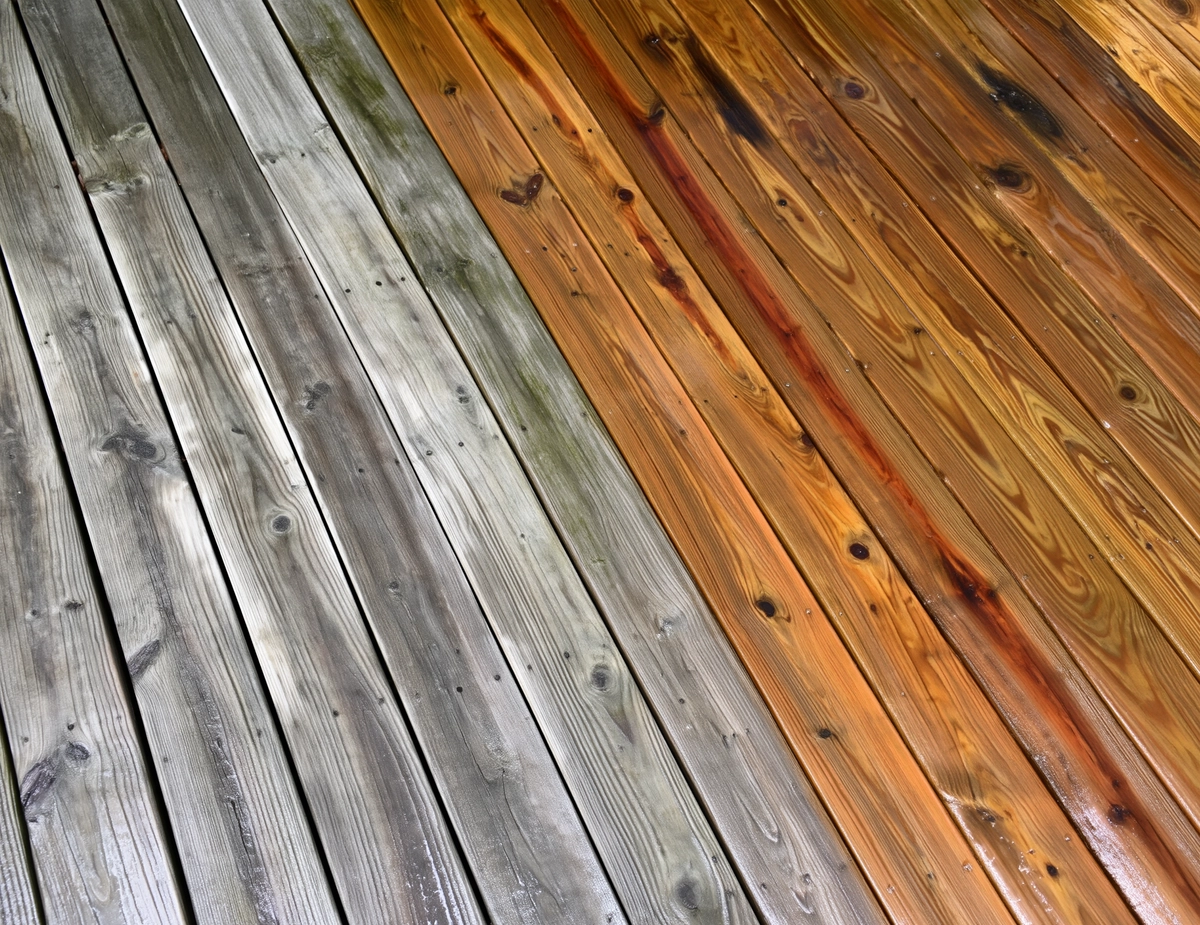
A wood deck needs gentle cleaning that lifts dirt and growth without cutting into the grain. Composite decking needs the care instructions for its particular brand and product line. An old coating adds another consideration: cleaning the boards and preparing them for a new finish are different jobs.
Before booking, decide whether you want routine cleaning or preparation for staining. That choice helps define the work and the result you can expect.
Start with the material you have
Decks often combine natural wood, composite or PVC boards, coated railings, and metal fittings. The decking and railing may need different care even when they were installed together.
Look for spare boards, an installer invoice, or product paperwork. A brand name is useful, but the product line can matter just as much. Two generations of composite decking from the same manufacturer may have different cleaning instructions.
Take care of loose or damaged parts first
Loose railings, moving stairs, soft boards, and corroded connections need a deck professional’s attention. Cleaning is not a structural inspection and cannot make a damaged deck sound.
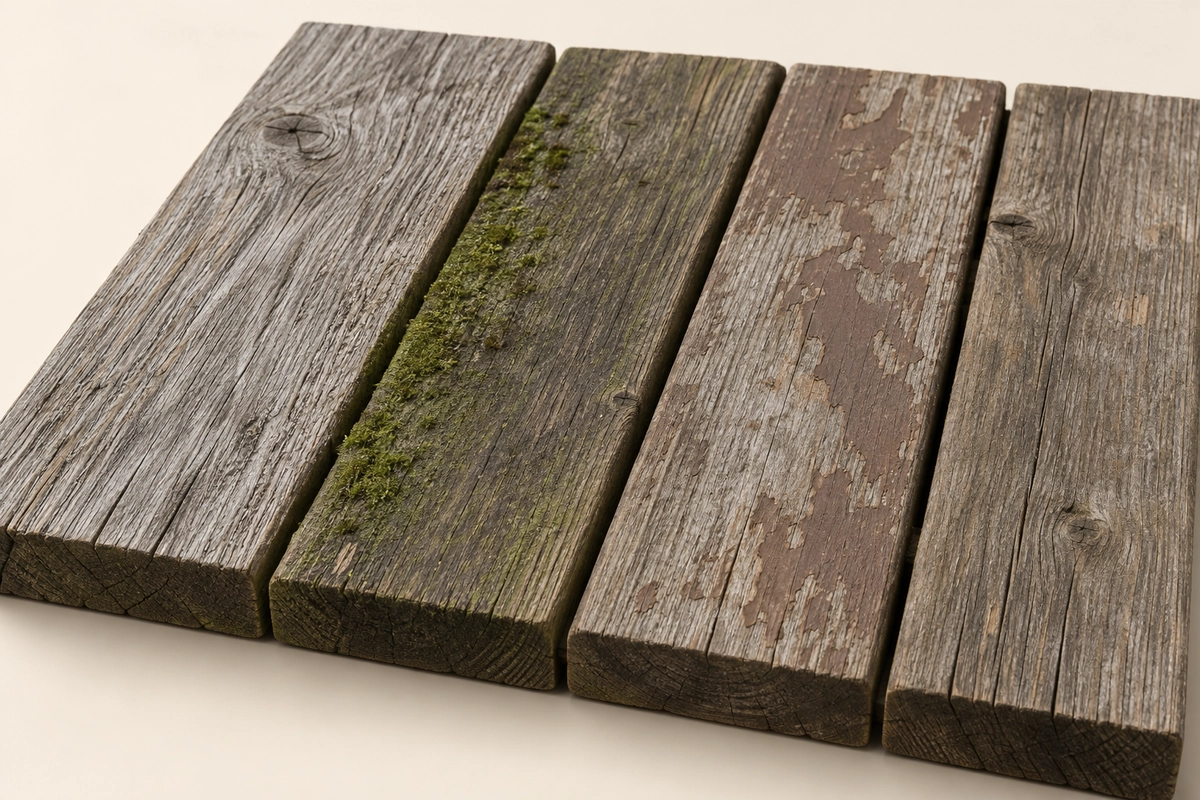
For the surface itself, note whether you see green film, gray weathering, peeling stain, grill grease, or leaf marks. These are different conditions. A peeling finish may need removal and refinishing rather than a routine wash.
Clean wood without gouging it
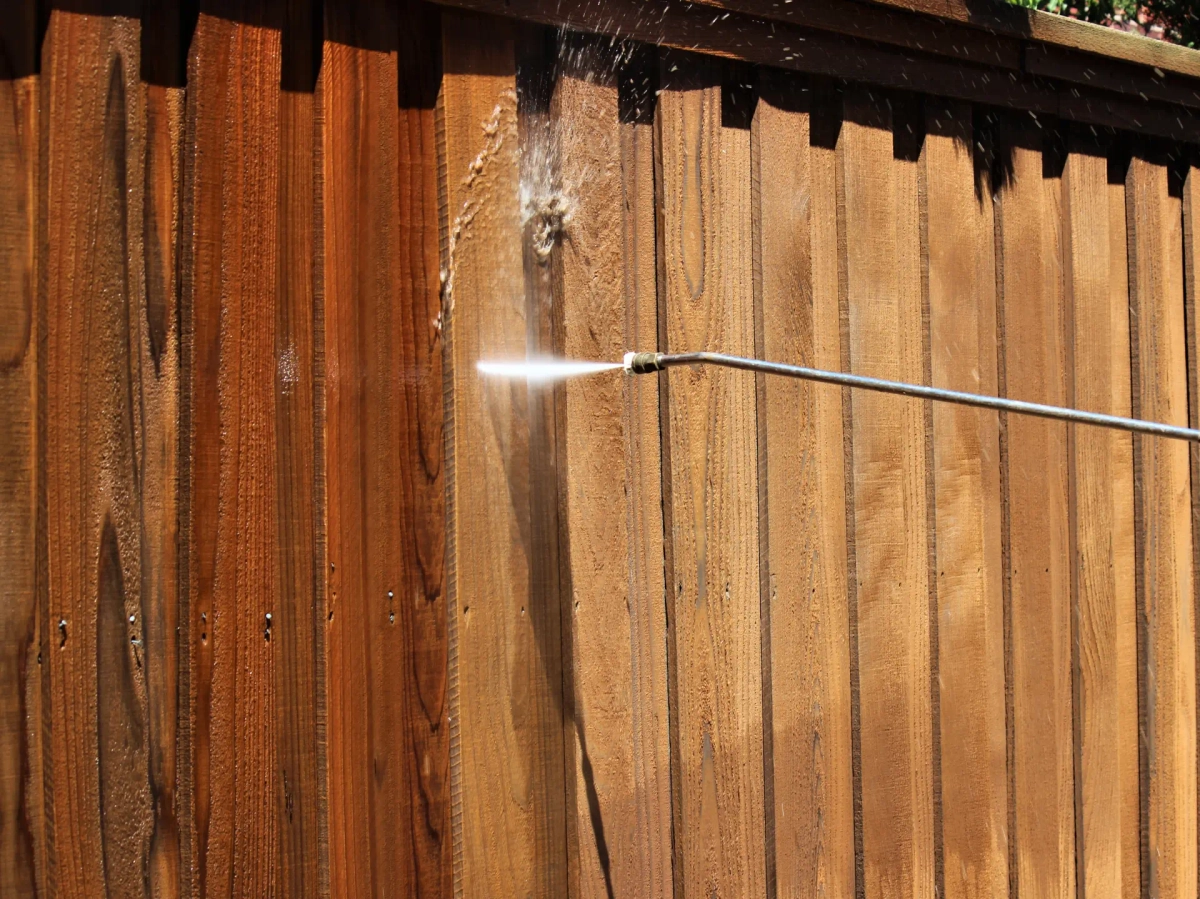
A concentrated stream can cut into the softer parts of wood and leave raised grain, ridges, or fan-shaped marks. Some damage becomes more obvious after the boards dry.
Gray weathering also differs from dirt. Sun and rain change exposed wood over time, so the brightest possible color is not a useful measure of how thoroughly it has been cleaned.
Our wood restoration service uses low pressure and may include a separate brightening step. The treatment depends on the wood and its condition. Sanding, carpentry, staining, and structural repair are separate work.
Composite boards follow the manufacturer’s care guide
Trex’s care guide illustrates why the exact product matters. It allows limited pressure washing on certain current lines, but advises against pressure washing its early-generation decking. That is not a setting to transfer to another brand or an unidentified board.
Find the relevant instructions for cleaners, brushes, rinsing, and spill removal. Food grease, leaf marks, and mineral residue may have separate directions. Use the railing manufacturer’s instructions for the rails as well.
After cleaning, let the surface dry before judging the result. Remaining dirty rinse water can leave a film, and wet boards can hide uneven color.
Decide whether you are cleaning or preparing for refinishing
Routine washing removes buildup. Preparing for stain may also involve coating removal, sanding, repairs, and checking the wood’s moisture. Washing alone does not complete those steps.
Tell us if a painter or deck contractor will be following the cleaning. They may need a particular preparation method for the finish they intend to apply. Peeling edges, bare traffic paths, and blisters should be discussed before work begins.
Protect what is below and beside the deck
Water passes through the gaps between boards. Furniture, storage, doors, and planting beds underneath the deck need to be considered along with the surface above.
Move loose items before the visit and let us know about outlets, lighting, or areas beneath the deck that must stay dry. This is especially useful for a raised deck over a patio or storage area.
Let wood dry before refinishing
A board can feel dry on top while still holding moisture. Shade, airflow, weather, and the wood itself affect drying. The USDA Wood Handbook’s finishing chapter explains why moisture and weathering matter to the performance of a finish.
Follow the stain or coating manufacturer’s preparation and moisture requirements. A fixed wait after washing is not a substitute for those instructions.
Brightening may improve the appearance of suitable wood after cleaning. It does not fill cracks, replace lost fibers, or seal the deck.
Keep the work safe
Wet boards and stairs can be slippery, so keep the deck clear during cleaning. If you use a pressure washer yourself, follow its manual and the CDC’s safety guidance. Leave work that requires unsafe access or involves damaged electrical fixtures to the appropriate professional.
When the deck needs repair
Arrange repairs first for loose stairs or railings, decayed boards, failing connections, or movement where the deck meets the house. A failed coating may also need specialist preparation before a fresh finish can be applied.
For a cleaning quote, send a photo of the whole deck, a closer view of its surface, and the brand or finish if you know it. Tell us whether you plan to stain afterward so the quote reflects the work you actually need.
Sources
Want us to handle it?
See exactly how we clean it and what’s included, or send us the details for a free quote.
Get a free quoteKeep reading
Ready for a clean you can see from the curb?
Tell us what you’d like cleaned, then text or email a couple of photos. We’ll explain the work and send a free quote.