
How to prevent red clay stains on a driveway
Published · Updated
In this guide
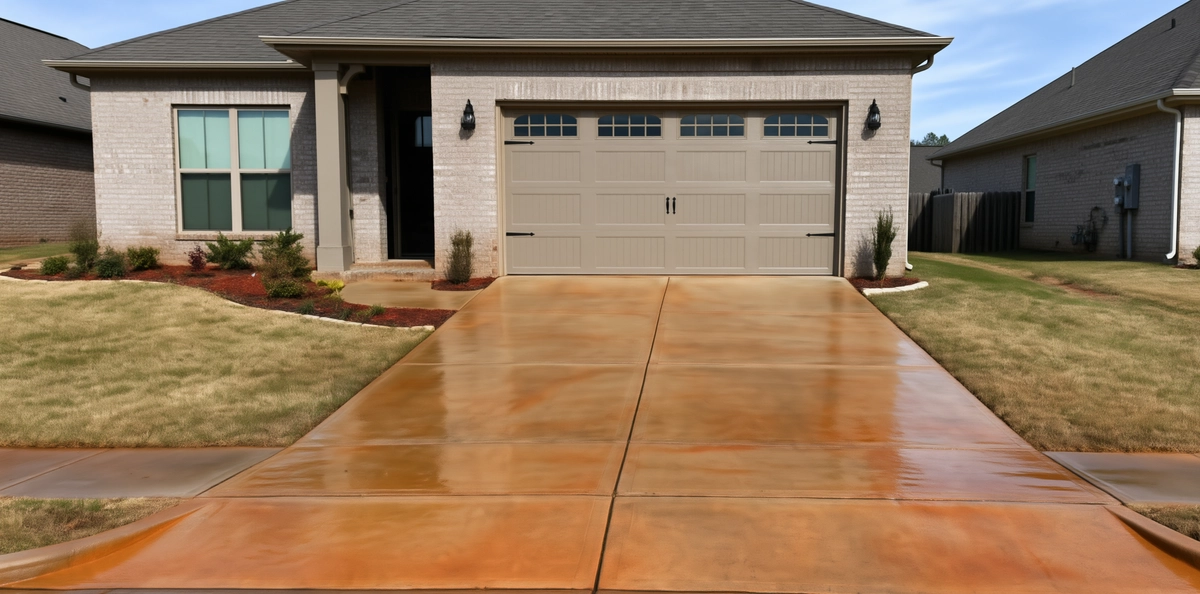
Recurring red-clay stains usually mean soil keeps reaching the same part of the driveway. Reducing that runoff or splash is the first step toward keeping the concrete clean longer.
Look at downspouts, raised planting beds, sprinklers, and tire tracks. Then treat the stain already on the surface. Cleaning and preventing new deposits solve different parts of the problem.
Watch where the water goes
After rain, look for the route between bare soil and the orange deposit. Water may follow a bed edge, a low part of the lawn, a compacted path, or a downspout outlet.
Common sources include:
- A downspout discharging onto bare clay beside the driveway
- A planting bed washing over the slab edge
- Irrigation striking soil and concrete
- Runoff crossing from the lawn onto the drive
- Tires carrying clay from landscaping or construction work
Photograph the route while the sediment pattern is visible. A narrow splash band may have a local cause; soil washing across much of the driveway can point to a larger drainage issue.
Keep bare soil out of the splash zone
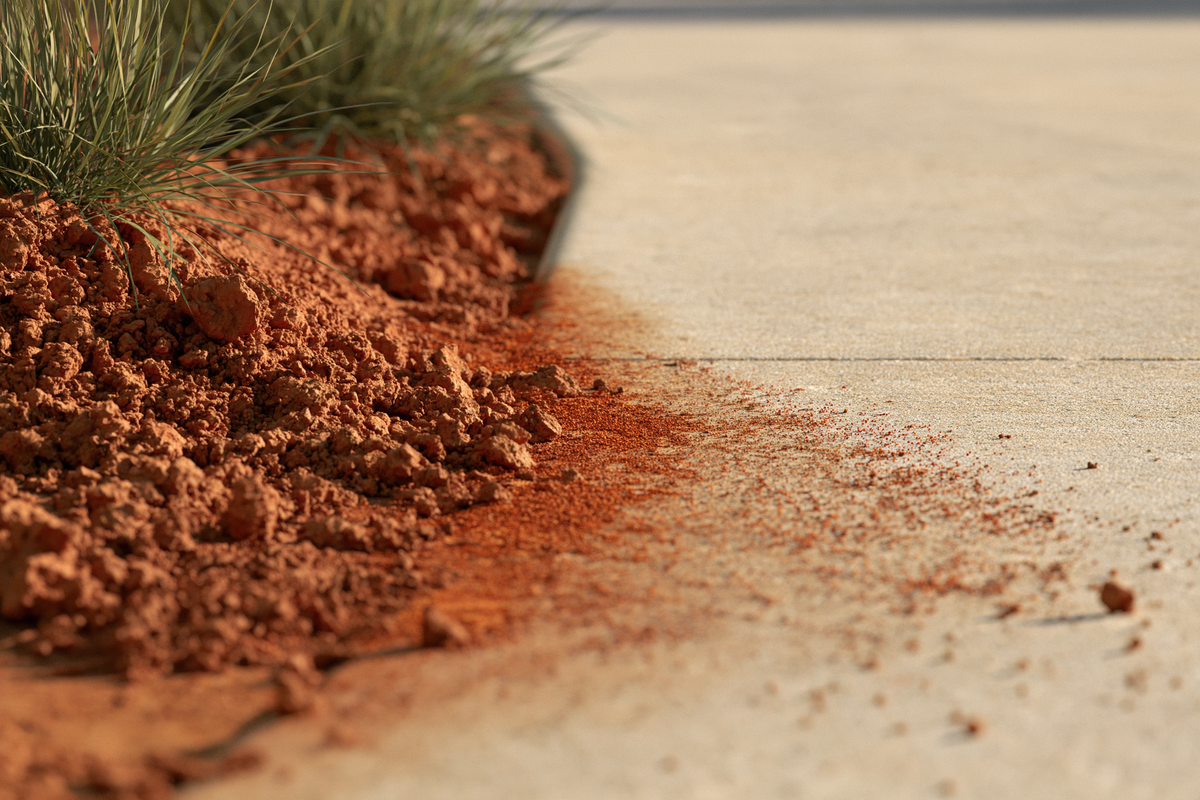
Rain striking exposed clay can scatter soil onto nearby concrete, brick, and siding. The USDA’s soil-color guidance identifies iron oxides as a source of red and orange soil colors. Even a thin deposit can show clearly on a light driveway.
Mulch or suitable ground cover can reduce exposed soil and help control splash. Alabama Cooperative Extension recommends using mulch in beds and maintaining irrigation to reduce landscape runoff.
Keep soil and mulch clear of siding, weep holes, and drainage openings. If concentrated roof water is washing through the bed, address the discharge as well as the ground cover.
Give downspouts somewhere safe to drain
When a downspout ends on clay beside the slab, each rain can carry more soil onto the same spot. A suitable discharge route can reduce that repeated deposit.
The outlet needs to work with the lot’s grade and drainage. Do not solve driveway staining by sending water toward a foundation or neighboring property. A drainage professional can assess substantial flow, erosion, or pooling near the house.
Keep existing extensions connected and their outlets clear. After a change, check that the water reaches its intended destination without making a new problem elsewhere.
Keep irrigation off hard surfaces
Watch the system run. Look for a head that sprays the driveway, strikes bare soil, or repeatedly wets the lower wall. A damaged or sunken head may need repair; an otherwise sound one may need adjustment.
If orange marks form where irrigation water lands without touching soil, the source may be iron in the water rather than clay. That distinction affects stain treatment.
Use edging and mulch with the drainage in mind
Edging can hold bed material in place, but it should not trap water until muddy overflow reaches the driveway. Planting and mulch work best when they suit the slope and water flow.
Sweep displaced soil off the drive before traffic spreads it. During landscaping work, ask how exposed clay will be contained until the permanent cover is established. Larger erosion-control or grading changes belong with the landscape or drainage contractor.
Clean after correcting runoff
Fresh soil may come off more easily than an older orange stain. Once the runoff issue is addressed, cleaning can deal with the remaining deposit.
Clean and Fresh offers driveway and patio cleaning and red clay stain removal. We clean the surface and treat suitable stains; we do not carry out drainage work or sealing.
A sealer will not stop clay from arriving. If you are considering one through another contractor, resolve the water source first and discuss the finish’s appearance and maintenance requirements with them.
When to call a drainage professional
Water entering the home, pooling at the foundation, or cutting channels through the yard needs more than a wash. Ask a drainage or landscape professional to assess the cause before spending repeatedly on stain removal.
Check the next rainfall
After a change, compare the next deposit with your earlier photo. Check whether the downspout stayed connected, soil remained in the bed, and water followed the intended route.
Our red clay stain removal guide explains why orange color can remain after loose soil is gone and when specialty treatment makes sense.
Sources
Want us to handle it?
See exactly how we clean it and what’s included, or send us the details for a free quote.
Get a free quoteKeep reading
Ready for a clean you can see from the curb?
Tell us what you’d like cleaned, then text or email a couple of photos. We’ll explain the work and send a free quote.