
Why red clay stains don’t wash off with pressure
Published · Updated
In this guide
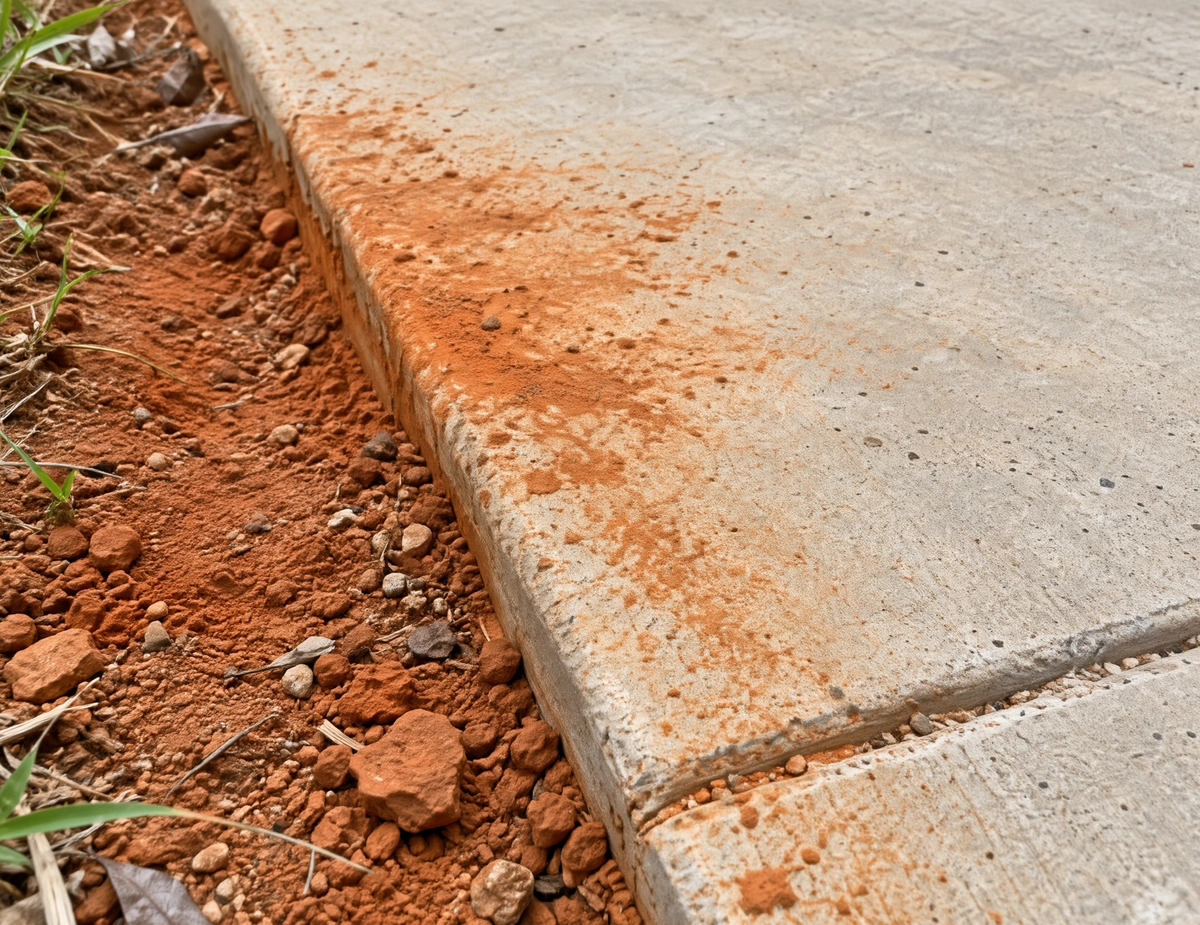
Fresh red-clay splash may rinse away, while an older orange stain can remain after the loose soil is gone. That remaining discoloration often needs a specialty cleaner suited to the surface.
Moving a pressure-washer nozzle closer is unlikely to solve the problem. It can damage concrete, mortar, or paint before the stain improves.
Why red clay leaves an orange mark
Iron oxides give many soils their red, orange, and brown colors. The USDA’s soil-color reference explains that connection. When soil reaches a light surface, fine residue can remain in its texture after the mud has washed away.
The stain’s location offers clues:
- A band along lower siding often follows splash from a bare bed.
- Orange along a driveway edge may trace runoff across soil.
- Marks near a sprinkler may come from clay splash or minerals in the water.
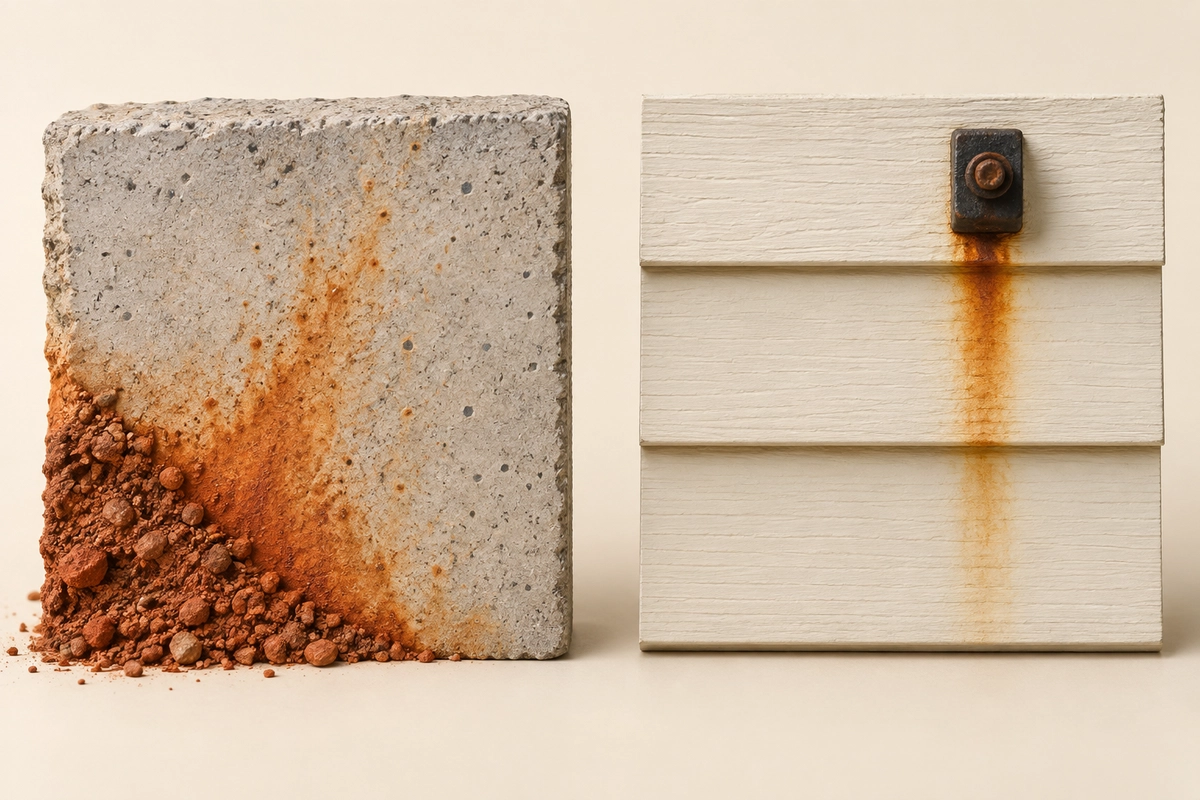
- A stain beneath metal furniture may be rust.
- A deposit below a downspout may start where roof water strikes the ground.
Color alone cannot distinguish all of these. Look at what is above and beside the mark before choosing a treatment.
Why more pressure can damage the surface
Pressure washing can remove loose dirt and buildup from suitable surfaces. A stubborn mineral stain is a different problem. Repeatedly concentrating the spray can leave etched concrete, damaged mortar, or lifted paint around an unchanged orange patch.
The treatment has to address the discoloration without harming the material underneath. A cleaner intended for organic growth may not remove an iron-related stain, and a product suitable for bare concrete may be unsuitable for siding.
The surface determines which cleaner you can use
| Surface | What affects treatment |
|---|---|
| Concrete | Texture, age, repairs, decorative color, and any sealer |
| Brick and mortar | The brick face, joint condition, and previous coatings |
| Vinyl siding | The finish, seams, and nearby openings |
| Painted surfaces | The coating’s condition and care instructions |
A broom-finished driveway and a decorative overlay are both concrete, but they need different consideration. Painted brick also has a coating to preserve. Fiber-cement siding should follow the guidance for its exact product and finish.
For any cleaning product, follow the label’s material restrictions and application instructions. Never mix products.
Handle fresh splash before it dries
Where the surface manufacturer’s instructions allow it, a gentle hose rinse may remove fresh soil before it becomes harder to clean. Avoid rubbing gritty mud across paint or vinyl, where it can scratch the finish.
Keep the rinse from crossing more bare clay and redepositing soil. Once the surface dries, check whether you are seeing loose residue or a remaining stain. If the orange color persists, increasing pressure can make the surrounding surface look worse.
The CDC’s pressure-washer guidance explains the equipment’s injury risks. A concentrated spray should never be used to experiment on a stubborn mark.
Treating older red-clay stains
Specialty treatment is chosen for the stain and the material carrying it. Old mortar, weathered paint, or a decorative finish can limit which products are suitable and how much improvement is possible.
Our red clay and rust stain removal service addresses suitable mineral stains separately from a general house or concrete wash. Send a photo of the stained area and tell us about any cleaner already applied. That history can help explain residue or changes in the finish.
Stop the stain from coming back
If new soil keeps arriving, the orange marks can return after cleaning. Common sources are downspouts discharging onto clay, bare beds, irrigation overspray, and tires tracking soil onto the driveway.
Our guide to preventing red clay stains explains how to trace those sources. Cleaning deals with the current stain; drainage and landscape changes reduce the next deposit.
When cleaning should wait
Loose mortar, peeling coatings, active water entry, or unstable ground should be assessed before treating the affected area. Repairing the surface or correcting the runoff may need to come first.
If you do not know the material, share that when requesting a quote. A photo and any installer or product information are more useful than trying another cleaner without knowing what it is going onto.
What stain treatment can and cannot change
Treatment can improve red-clay discoloration, but it does not reverse weathering or damage beneath the stain. Old marks and worn finishes may retain some variation.
For a quote, show us the whole affected area as well as the stain up close. We can discuss the likely treatment and its limits before you decide on the work.
Sources
Want us to handle it?
See exactly how we clean it and what’s included, or send us the details for a free quote.
Get a free quoteKeep reading
Ready for a clean you can see from the curb?
Tell us what you’d like cleaned, then text or email a couple of photos. We’ll explain the work and send a free quote.