
Why the shaded half of a driveway turns green first
Published · Updated
In this guide
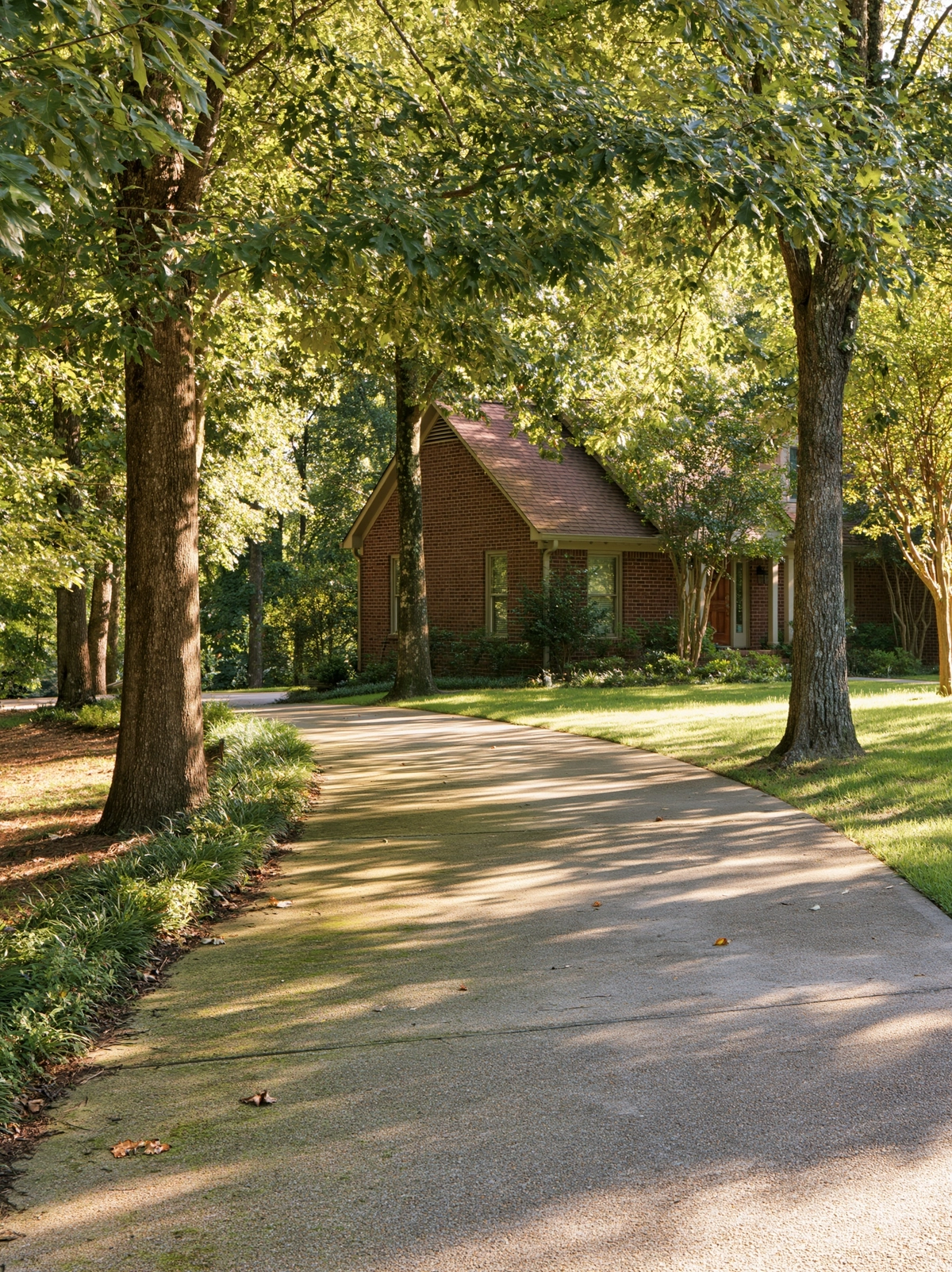
The shaded half of a driveway often turns green first because it stays damp longer. Trees, fences, and nearby buildings can slow drying after rain or irrigation, giving algae and other growth more favorable conditions.
Cleaning removes the buildup. Reducing persistent wetting and accumulated leaves can help it stay clean longer, though a shaded driveway may continue to need more attention than an exposed one.
Shade keeps concrete damp longer
Sun and airflow help a driveway dry. A section under a tree canopy or beside a wall may remain damp after the rest has dried, so the visible growth can follow a shade line rather than the concrete joints.
Oregon State University identifies algae on shady walls and paving and notes that it can make walkways slippery. Persistent moisture helps explain why growth returns to the same shaded areas.
Huntsville’s monthly climate normals show rain throughout the year. Add irrigation or a downspout that wets the same spot, and that part of the drive may have little time to dry between soakings.
Slippery steps and walkways
Growth on a rarely used edge is mainly an appearance concern. The same buildup on a step, slope, or path to the front door can affect everyday use, especially when wet.
Prioritize the routes people use: the walk from the car, the front steps, the gate, and the area beside a pool. Observe a slippery-looking patch from a dry spot rather than walking onto it to check.
Cleaning can remove slippery growth. A worn-smooth finish, uneven slab, or drainage problem needs separate attention.
Not every dark mark is the same thing
A shaded driveway may have several kinds of discoloration together:
| What you see | Possible source | What to expect |
|---|---|---|
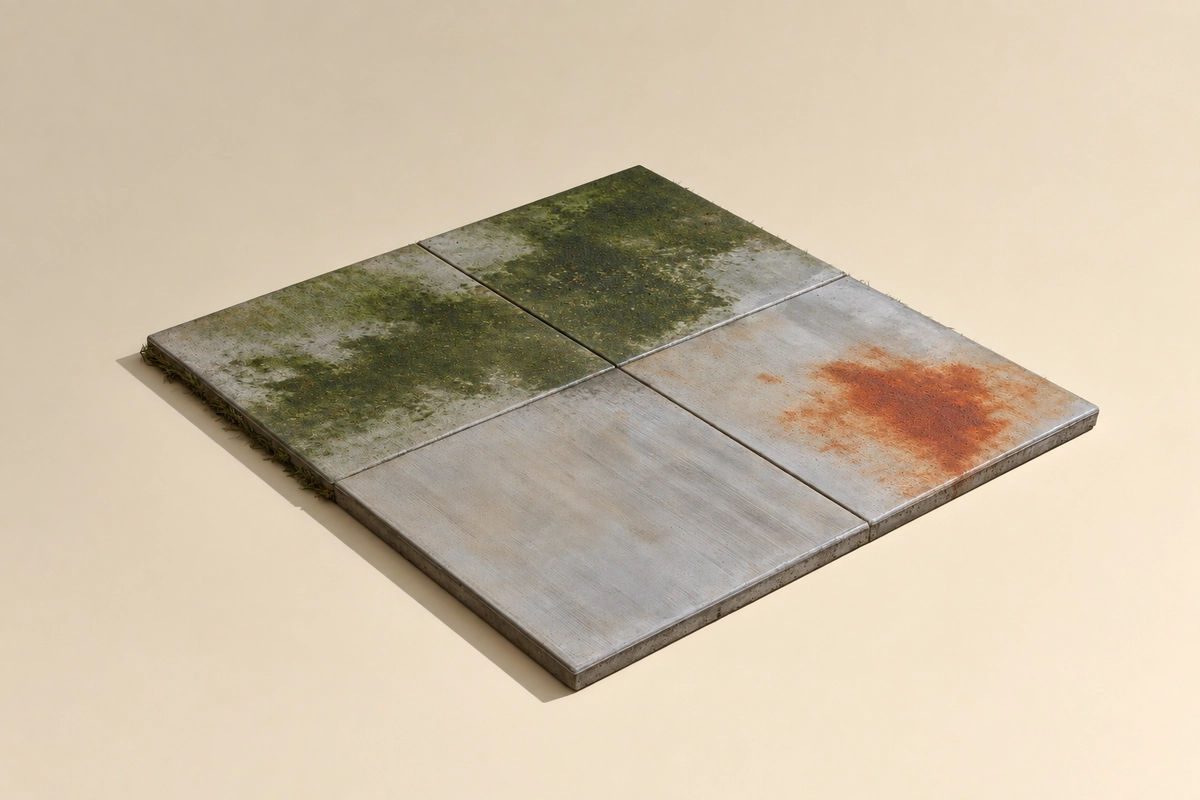
| Green or dark film in a damp area | Algae or other organic growth | Surface cleaning may improve it |
| Brown marks beneath leaves or mulch | Tannin stains | Some marks may need separate attention |
| Orange deposits | Clay, rust, or irrigation minerals | Specialty treatment may be needed |
| Dark wheel paths | Tire and traffic residue | A general rinse may leave residue |
The pattern helps narrow the cause, but color alone is not enough. A photo that includes the trees, beds, and nearby water sources is useful alongside a close-up of the stain.
Reduce leaf buildup and excess water
Remove leaf litter and displaced mulch before they form a wet mat on the concrete. Check whether a sprinkler or downspout keeps wetting the same area. Where vegetation is overgrown, appropriate pruning may improve light and airflow.
You do not need to remove healthy trees simply to have a cleaner driveway. Focus on avoidable debris and excess water. If a bed keeps washing soil onto the slab, address that source as well as the visible stain.
When to clean shaded concrete
Arrange cleaning when buildup becomes noticeable or affects a walking route. You can discuss whether the affected section or the whole driveway makes sense to clean, including the appearance of the boundary between them.
Choose conditions that allow the area to drain and dry, particularly in cooler weather. Clear vehicles and loose items from the work area, and mention low spots, nearby doors, or drains that affect rinse water.
Cleaning and concrete repairs
Sound concrete can often be pressure washed. Scaling, loose surface material, coatings, and decorative finishes need a different assessment. Repairs and natural color variation may remain visible after the dirt is gone.
Large cracks, movement, and water undermining a slab need repair advice. A wash cannot correct those conditions.
Our driveway and patio cleaning service addresses suitable exterior concrete. If orange staining remains after general cleaning, red clay and rust stain removal may be appropriate.
Keep up with the shaded areas
After wet weather, clear new debris and note where moisture lingers. That pattern helps you see whether an irrigation adjustment or drainage change has helped.
For a quote, show us the affected area and tell us if it becomes slippery when wet. We can discuss the cleaning needed and any stains or surface damage that will remain a separate issue.
Sources
Want us to handle it?
See exactly how we clean it and what’s included, or send us the details for a free quote.
Get a free quoteKeep reading
Ready for a clean you can see from the curb?
Tell us what you’d like cleaned, then text or email a couple of photos. We’ll explain the work and send a free quote.