
Is soft washing the same as pressure washing?
Not quite. Soft washing uses detergent to loosen dirt and growth, then a low-pressure rinse carries it away. That’s how we wash siding and trim; the pressure we’d use on concrete isn’t right for them.
House washing · Huntsville & North Alabama
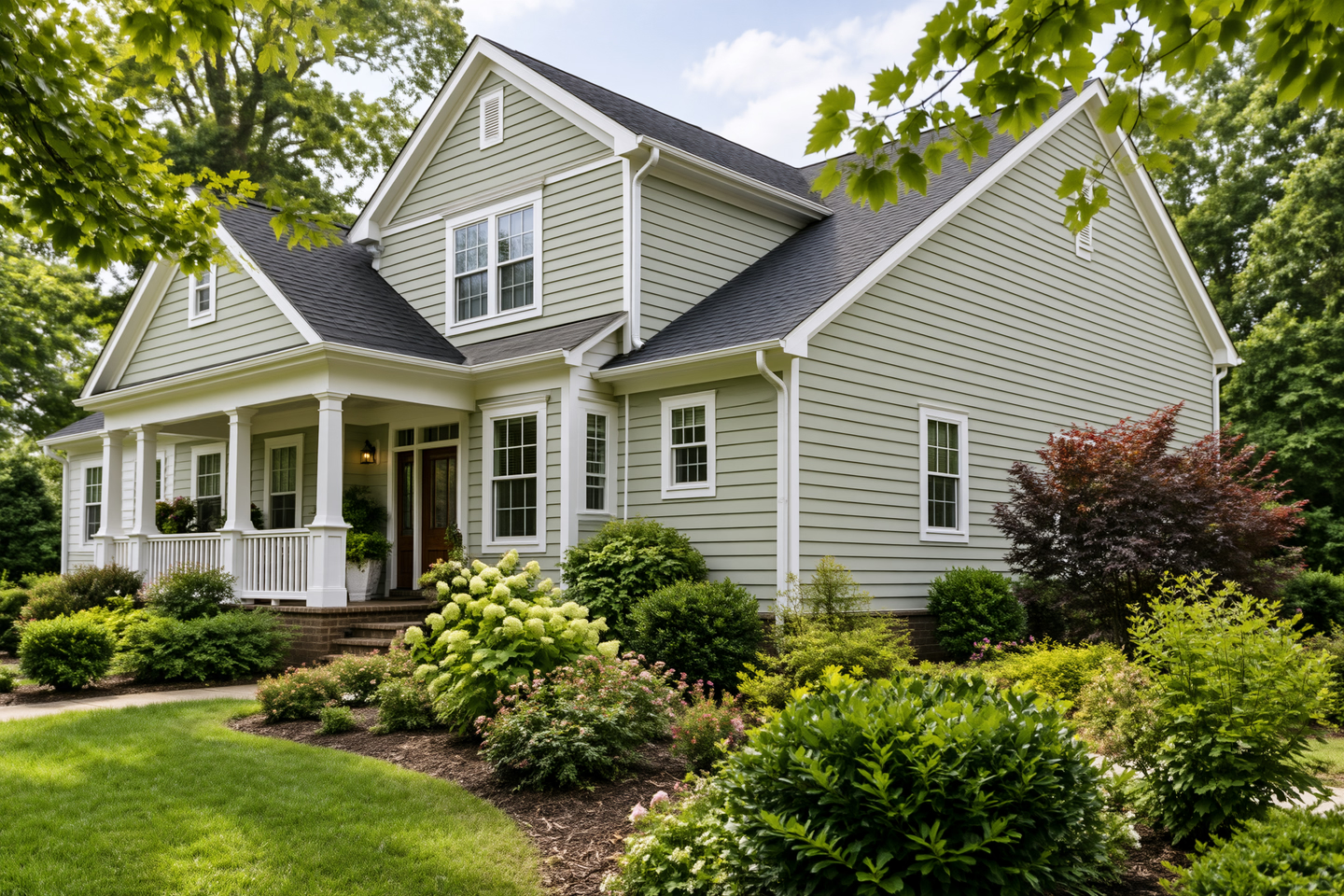
Soft washing lifts green growth, pollen and grime from siding, brick and trim with detergent and a low-pressure rinse. A basic exterior window rinse comes with every house wash.
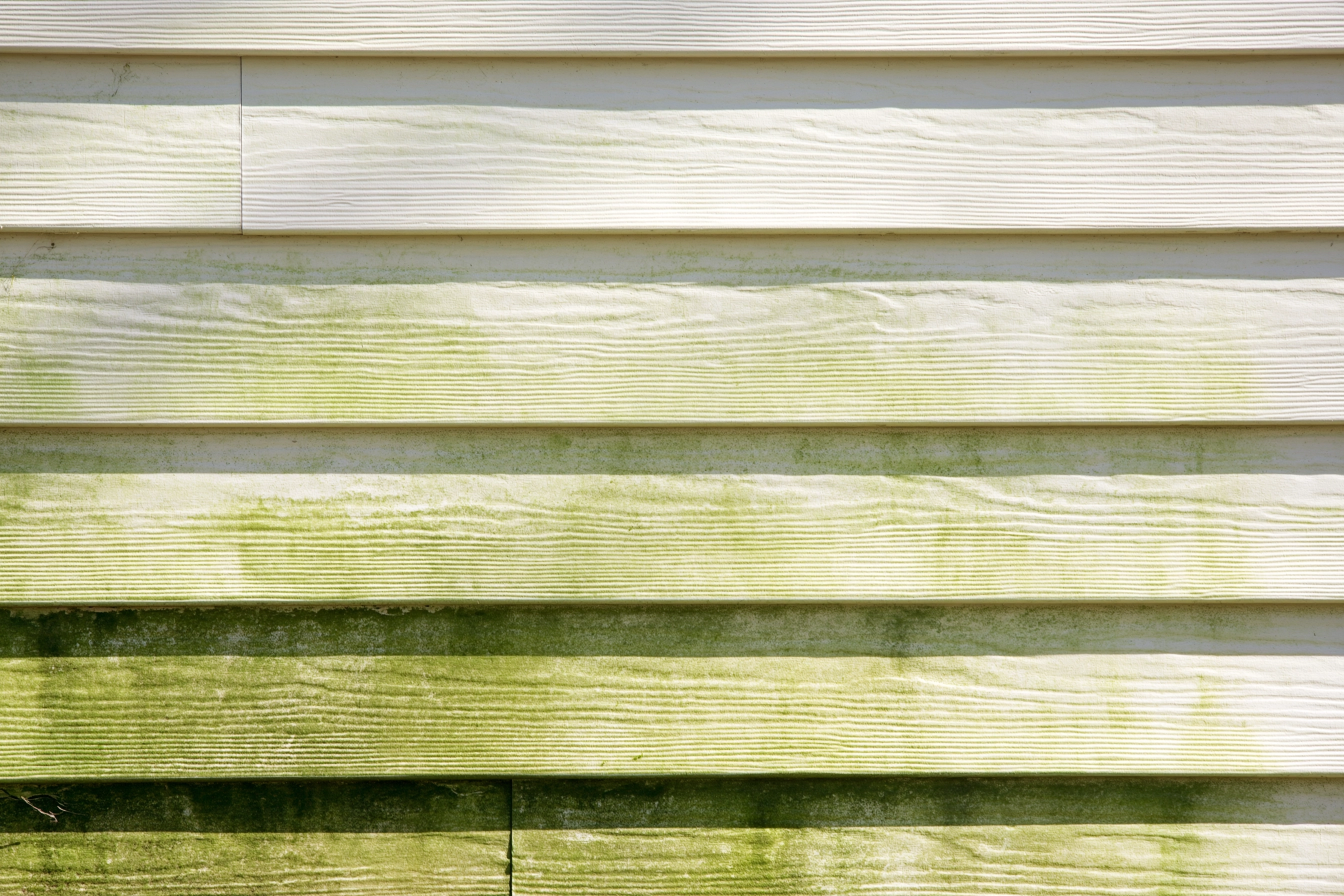
Algae and mildew grow fastest where siding stays shaded and damp, so walls under trees, the shady side of the house and spots near sprinklers usually go green first. Pollen and road dust add a dull film across trim, porch corners and window frames. That’s why one side of a home can need washing long before another.
A house wash brings the siding, brick accents and trim into one cleaning plan, with the exterior window rinse included. If the paint and siding are sound, cleaning removes the buildup and leaves the finish as it was. If a wall is chalky, faded or peeling, we’ll point it out before we start, because that’s the finish itself rather than dirt.
See what’s includedA guide to the surface
A house wash brings the walls, trim and a basic exterior window rinse into one cleaning plan.
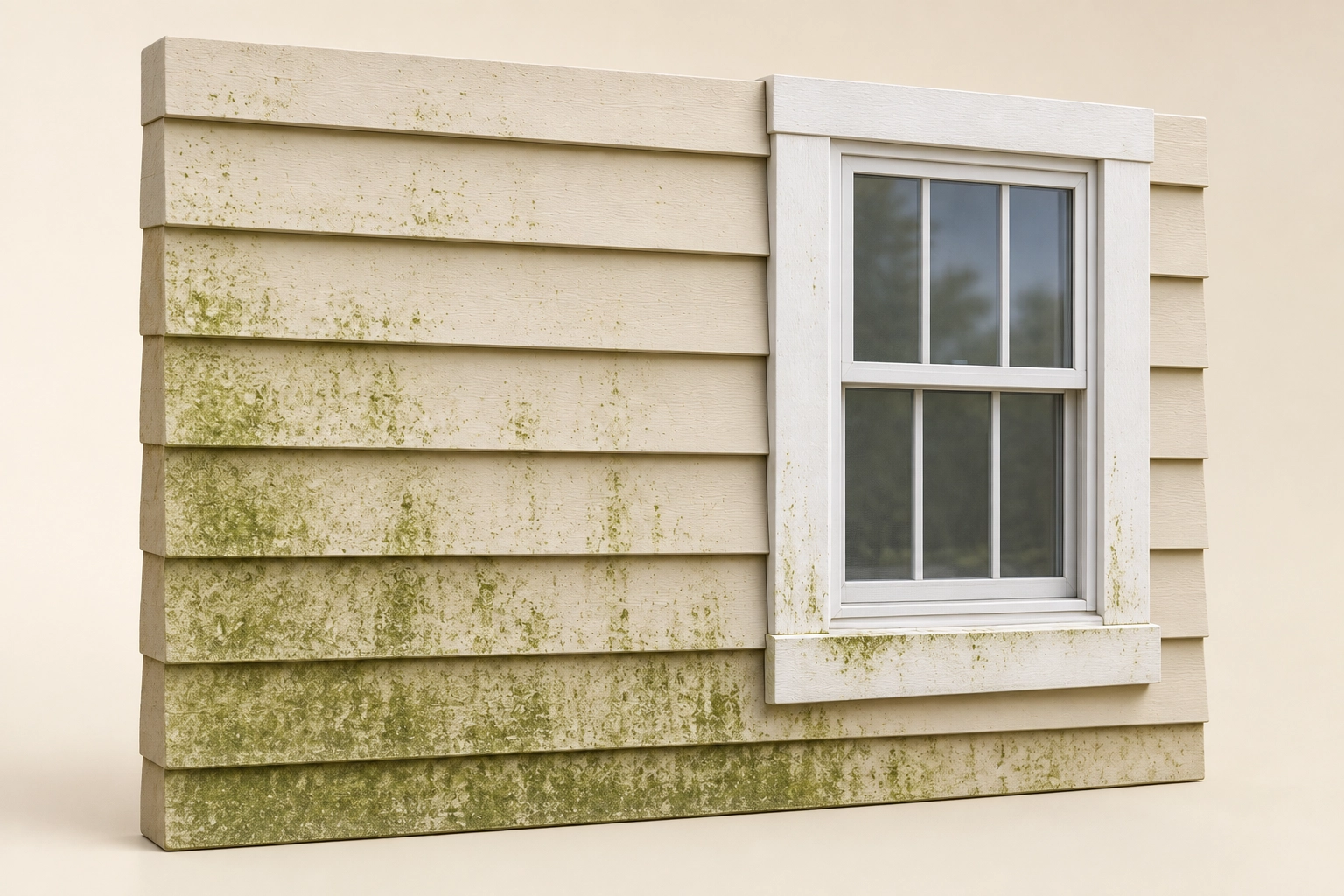
Choose a label to locate that part of the image.
Detergent loosens dirt, pollen and organic growth, then a low-pressure rinse carries it away. Faded or damaged finishes are a separate conversation.
Trim is washed along with the walls. Striped gutter faces may need exterior gutter whitening as well.
Glass, frames and screens get a basic rinse with every house wash. Spot-free detailing isn’t included.
We start by checking the siding, trim, windows and openings. A detergent suited to the material is applied, given time to loosen dirt, pollen and organic growth, and rinsed away at low pressure. The cleaner does the heavy lifting, so siding and painted trim never get the pressure we’d use on concrete. We plan application and rinsing around your landscaping and treat nearby plants as the job requires. Orange clay stains and striped gutter faces need their own treatment, which we can quote alongside.
See the difference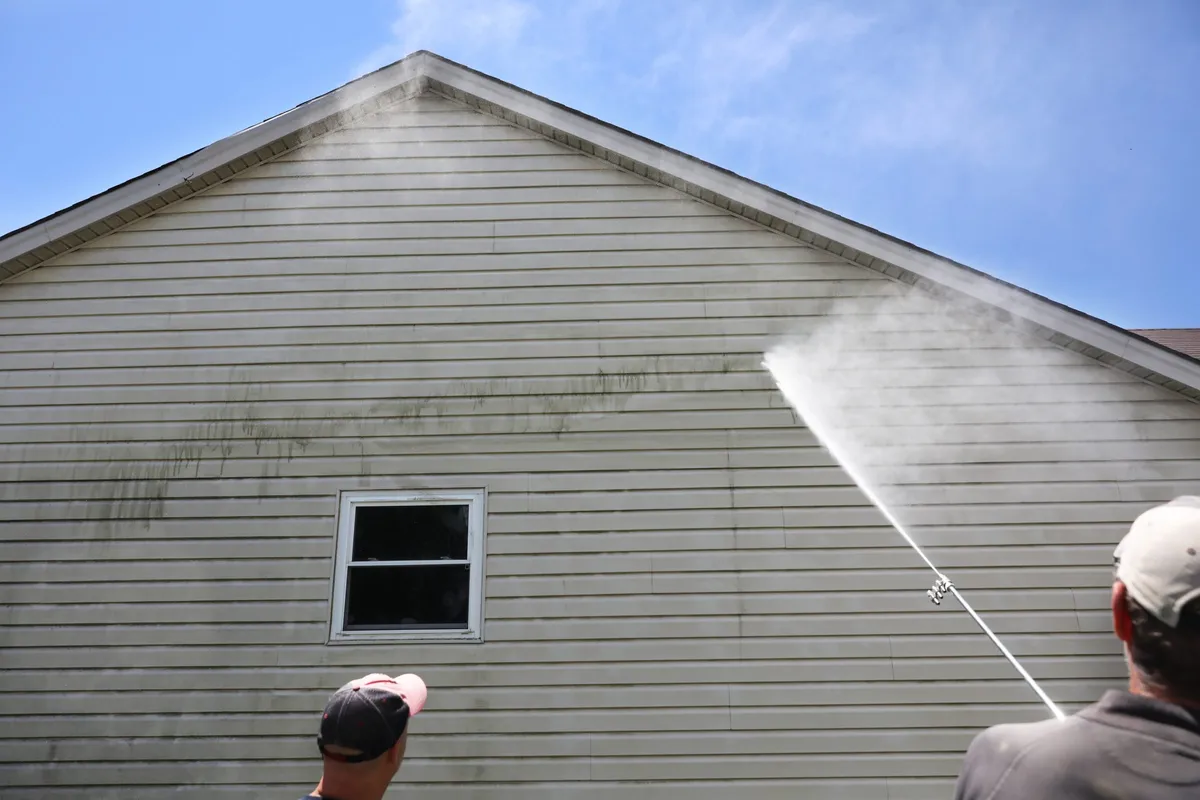
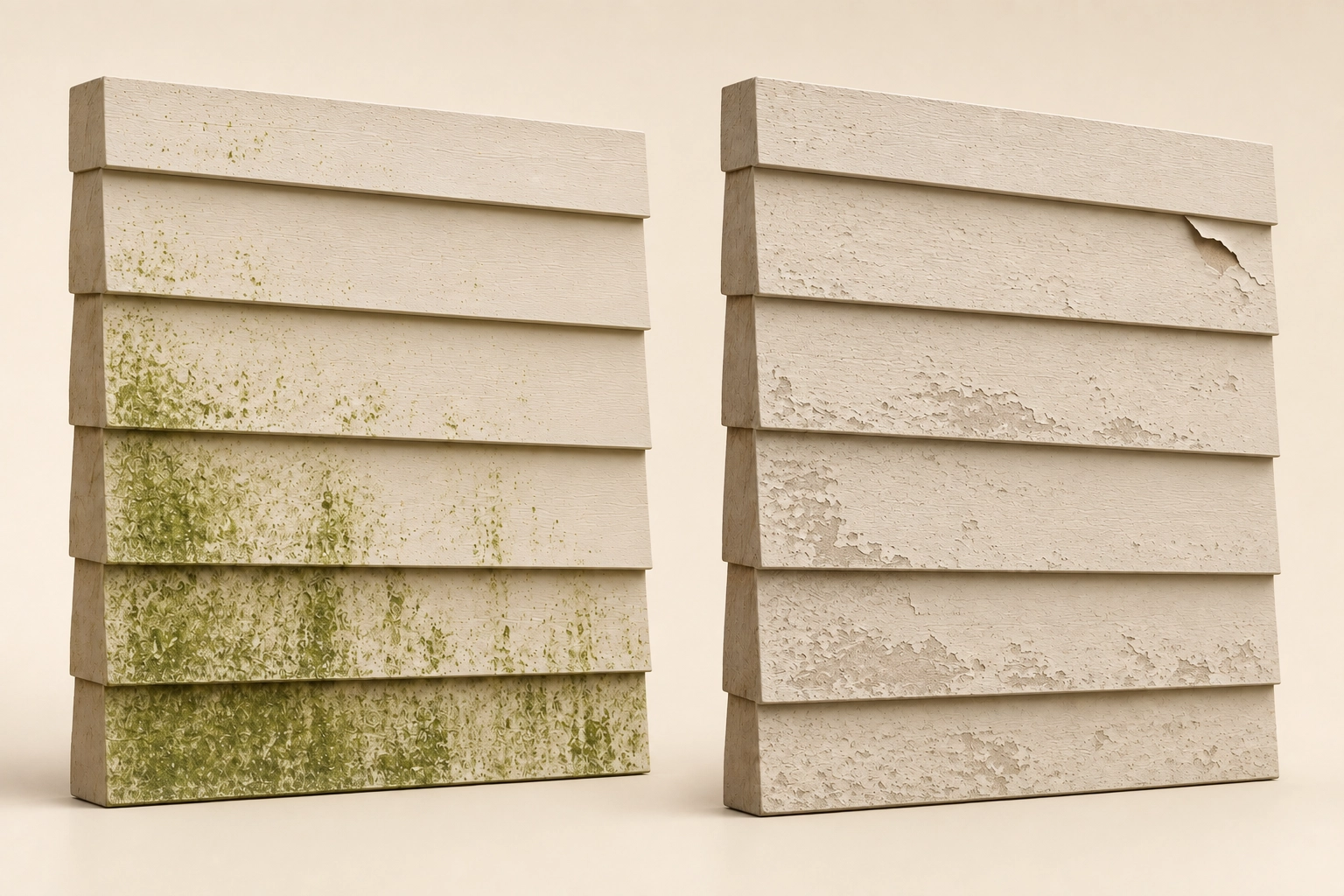
A house wash removes dirt, pollen and organic growth. Chalky oxidation, faded or peeling paint and damaged siding are changes to the finish, and washing won’t reverse them.
From our work
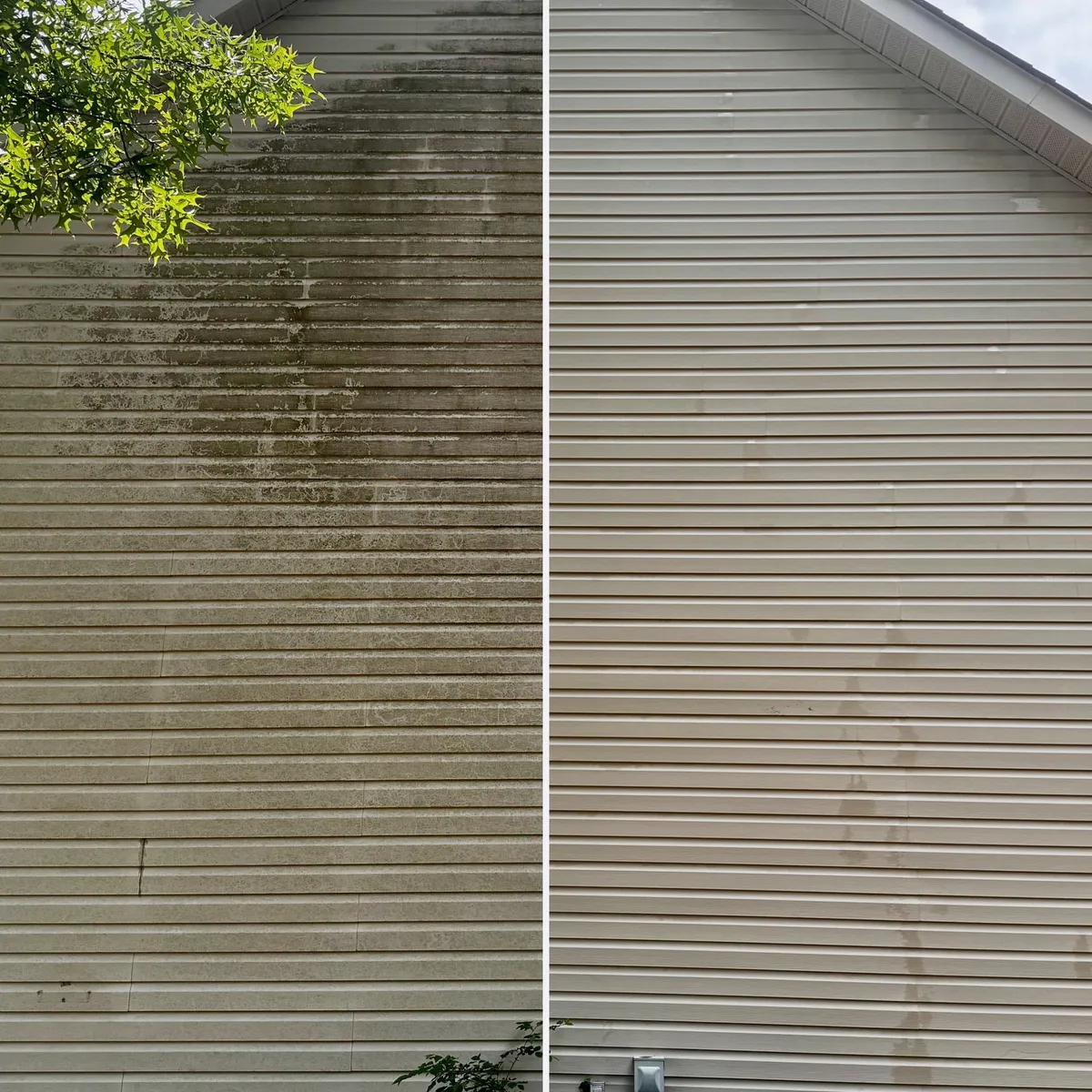
Look at the siding beneath the tree: dark, patchy buildup gives way to a much clearer view of the pale boards. The horizontal seams and original surface remain visible.
See more before-and-after photosSeeing something similar at your place? Start a quote with this example attached.
Quote work like thisDon’t see your question? Give us a call and we’ll talk it through.
Not quite. Soft washing uses detergent to loosen dirt and growth, then a low-pressure rinse carries it away. That’s how we wash siding and trim; the pressure we’d use on concrete isn’t right for them.
Go by how the siding looks rather than the date of the last wash. Green growth on a shaded wall, pollen along the trim and a film of dirt are the usual signs. Shade, trees, moisture and roof runoff mean different sides of the same house can need it at different times.
A photo of the affected side helps us tell general buildup from a particular stain. There’s no single schedule that fits every North Alabama home.
We wash siding, trim, soffits, porches and brick accents where the material suits it, and a basic rinse of the exterior windows, frames and screens is included. Let us know about loose paint or damaged window seals when you ask for a quote.
No. Organic growth sits on the surface, while oxidation and fading are changes in the finish itself. A chalky or uneven surface can still look uneven once the dirt is gone, and a house wash won’t renew faded siding, replace paint or fix a failing coating.
Mention chalkiness, peeling or old cleaning marks when you ask for a quote, so we can separate what washing will improve from what the finish itself needs.
Pollen is part of the everyday buildup a house wash removes, from the walls, trim, screens and window frames alike. Cleaning removes what’s there on the day; it can’t stop fresh pollen from landing afterward. If pollen is the main reason you’re booking, mention it so we can talk about timing.
We plan how the cleaner is applied and rinsed around the plants close to your home, and we treat surrounding foliage as the application requires. We also account for nearby windows, outlets, painted surfaces and other openings. Tell us about delicate beds or damage that might not show in a wide photo, so we plan for your property rather than assuming every wall is the same.
Almost every job is finished in less than a day, including most house washes. You don’t need to be home while we work; just tell us about gates, pets or anything else we should know about access.
Every house wash is quoted for the specific property, and quotes are free. The price depends on the size and height of the home, how much growth and grime there is, the siding material and access around the house. A wide photo and a close-up can start the quote, we can often measure with GPS-assisted tools, and we visit when the property needs it or you’d prefer it. Your quote spells out what’s included, and the price only changes if you change the scope. You don’t pay until the work is done.
Tell us which sides of the house you want washed, and send a wide photo of the home plus a close-up of the worst area. Mention loose paint, damaged window seals or tricky access. Want the driveway or gutter faces done at the same time? Add them to the same request; the window rinse is already included.
Pick the service, add your town and describe the areas. A wide photo and a close-up can start the quote, and you can review everything before it’s sent.
We can often measure with GPS-assisted tools, and we visit when the property needs it or you’d prefer it. You don’t need to be home.
You’ll see what’s included and what’s separate before anything is booked. The price only changes if you change the scope, and you pay when the work is done.
How we work
Around the same property
Any of these can go on one request, or read the details first.
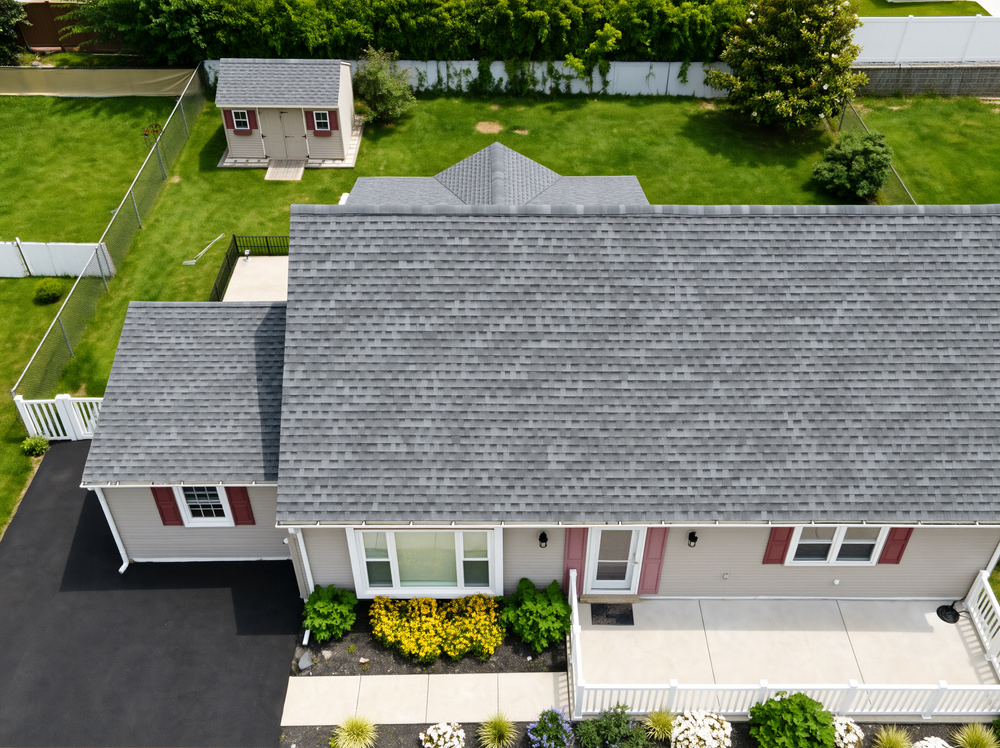
Black streaks on shingles are often algae. We treat compatible asphalt shingles with a low-pressure solution instead of power washing, and clean suitable coated-metal roofs with a controlled soak and rinse.
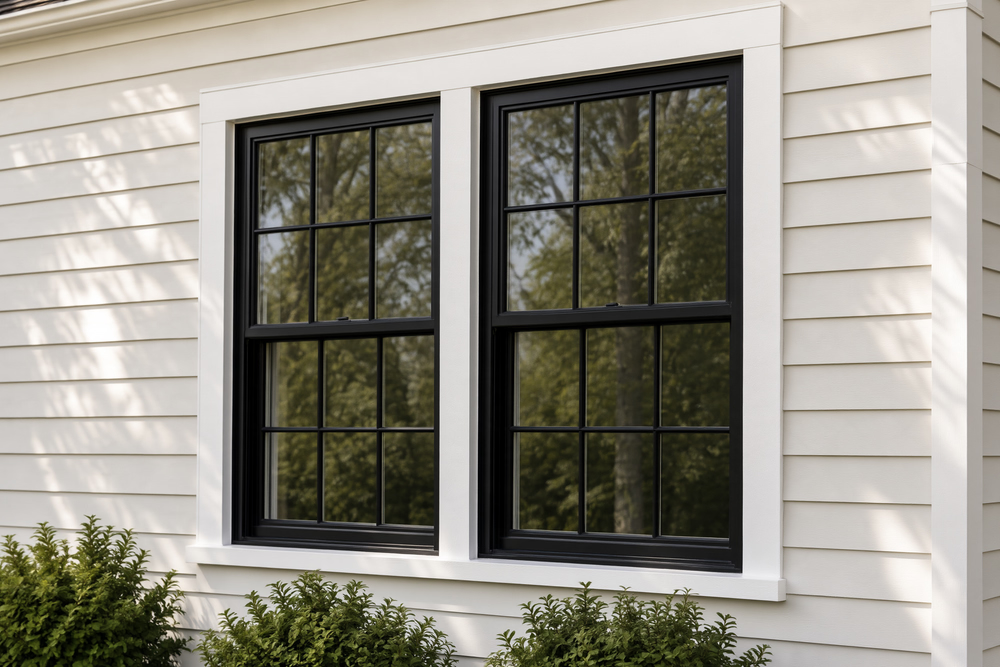
Every house wash includes a basic exterior rinse of your windows, frames and screens, clearing the cobwebs, pollen and outdoor film that build up along with the siding.